Buy Healthy Major Mitchell’s Cockatoo
Price range: $6,000.00 through $12,100.00
Species Overview
COMMON NAMES: Major Mitchell’s cockatoo, Leadbeater’s cockatoo, pink cockatoo, desert cockatoo, wee juggler, cocklerina, chockalott
SCIENTIFIC NAME: Cavatua Lophocroa leadbeateri
ADULT SIZE: 13 to 15 inches in length
LIFE EXPECTANCY: 40 to 60 years in the wild; up to 80 years in captivity
Temperament
A high-maintenance species, this bird requires daily socialization and interaction with its owner to maintain good emotional health. This species has a natural tendency to form a tightly knit bond for life. As its keeper, you will become its bonded mate. This bird is funny and energetic, as well as cuddly and affectionate.
Major Mitchell’s Cockatoo can be temperamental. This bird is sensitive to the absence of its bonded human. Your bird might even shun you after taking a short vacation. It can take some time to earn back the bird’s trust. Neglected cockatoos may resort to destructive behaviors, such as self-mutilation, chewing on wires, and destroying furniture.
Since they tend to bond with one-person, Major Mitchell’s cockatoos can show signs of jealousy when their owners interact with other people. They may try to nip or bite the other people to show their irritation. This is a significant reason why this bird is not a good pet for families with small children.
These birds are brilliant and can be taught tricks like dancing or playing hide and seek. Some learn to speak or can at least whistle to get their owner’s attention. They can hit some pretty high notes and have a natural alarm call intended to be heard for miles in the wild.
Major Mitchell’s Cockatoo Speech and Vocalizations
In general, cockatoos can be loud and incessant talkers. The Major Mitchell’s species is noticeably quieter and more prone to natural calls. They can be taught to say a few basic words and can mimic whistles or alarms. Their natural calls are not too loud; they make exotic chirps and high-pitched alarm calls. Thus, they probably aren’t suited to live in apartments or other close quarters with nearby neighbors.
Major Mitchell’s Cockatoo Colors and Markings
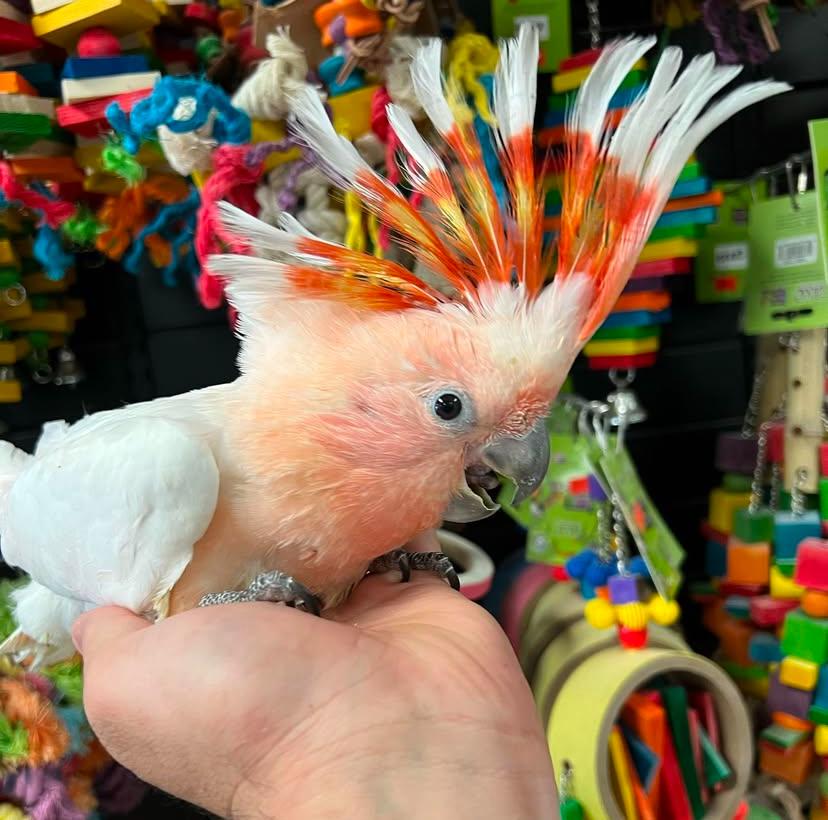
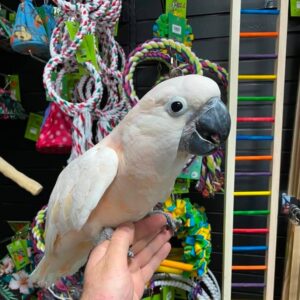
The Major Mitchell’s species is the only cockatoo to have a multi-colored crest. When extended, you’ll see bright pink and yellow-orange feathers with white at the tips.
The colorful Major Mitchell’s cockatoo is primarily pinkish-white and very easy to recognize. These flashy birds have broad pink patches around the neck and on the underbelly. They often have bold pink under their white-tipped wings.
Caring for Major Mitchell’s Cockatoo
While it can be tempting to rush out and buy one of these beautiful birds, Major Mitchell’s cockatoos need specialized care and environments that not all bird owners can accommodate. It is best if they live in a walk-in cage (5 feet high) that is at least 4 feet long. This allows the large bird plenty of room to move.
These birds are moderately strong chewers and can break welds on poorly constructed cages. Many can open cage latches, so locks or escape-proof latches may be necessary.
Exercise
Just like its fellow members of the parrot family, Major Mitchell’s cockatoos are active birds that need plenty of exercise to maintain their physical condition. They need a minimum of three to four hours outside of the cage every day to stretch their wings.
Provide your Major Mitchell’s cockatoo with safe chew toys to exercise their beaks. These birds chew wood to make nests in the wild and will display that same behavior in captivity if they get bored or restless.
Dear birder,
Thank you for visiting our website. We noticed you recently viewed Bird-Breeder shop section. We have new arrivals that have not been listed on the website yet, but we can always provide guidance to help you decide on what you want.
For more details contact website assistance on parrots4home support
Learn more about how to be a responsible bird owner!
| Gender | Female, Male, Pair |
|---|
Related products
Parrot
Price range: $3,600.00 through $7,200.00
Parrot
Price range: $3,600.00 through $7,200.00
Parrot
Price range: $3,000.00 through $6,000.00

Parrot
Price range: $4,500.00 through $9,000.00
Parrot
Price range: $18,000.00 through $37,000.00
Parrot
Price range: $4,500.00 through $9,000.00

Parrot
Price range: $4,500.00 through $9,000.00

Parrot
Price range: $700.00 through $1,400.00